Kipling’s “Beast and Man in
I believe that this argument applies to much of the Western world as well. Kipling points out that the Christian doctrine of generosity and poverty is no longer prevalent in the Western world. Today this remains the same. Church attendance is down and people jump to buy the best money can buy whether it is a new Escalade with rims or wintering in St. Bart’s. Just like the modern Hinduism that Kipling describes, Christianity is going through the “process of decay and change.”[3] Moreover, in the West as well it is easier to follow religious decree if you are wealthy. You can afford to give large sums of money away, you can afford to take of work to volunteer etc. The truly poor are not poor because of an obligation to faith.

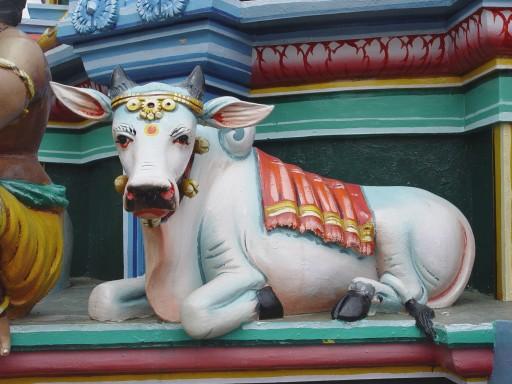
I really enjoyed Kipling’s argument criticizing Indian religion’s hypocritical love for animals. He points to Hindus “who would die sooner than eat flesh, but who would also rather die than touch or help a dying man of a low caste near his door.”[5] I wonder how someone can claim to be holy and righteous but shun creatures of his own race. Surely cruelty against humans is more pertinent than cruelty against animals. Some may argue differently, that the human is self-sufficient and an animal is not. But under the caste system, humans are not self-sufficient; they are restricted to the class into which they are born. This video provides an insight into the harsh treatment endured by these people. [6] In a sense, they become lower than animals in the minds of the upper classes. Kipling also points out the hypocrisy in the love and reverence for cows in the Hindu religion. These animals receive respect while others such as pigs are hated. A cow cannot stand as an example for animal rights when it is one of a few species that are well treated.

No comments:
Post a Comment