Tuesday, April 29, 2008

Downtown Excursion

In the Driskill...

On Wednesday April 23 Cat and I took an excursion downtown because we could not make the field trip. We both live in West Campus so the walk to the Capitol Building was a short and easy one. We identified with Ancient Greece upon arrival when we saw the examples of Doric, Ionic and Corinthian columns both inside and outside of the building.

[1]Ionic column on rotunda of Capitol just below top layer of dome next to windows and Corintian columns under Ionics.

Doric Column on North entrance.

Once we documented all of the columns Cat and I headed to the center of the building, under the illustrious dome. Unfortunately, we could not get right under the dome because a group of braces-wearing middle school students were monopolizing the area. But the effect was still dazzling nonetheless. Photo of Cat and me under the dome area. As I lay there, looking up into the eternal perfection of the dome shape, I could not help but to become lost in the dome’s trance. The rotunda, just as that of the Pantheon and St. Peter’s Basilica, seemed to be beckoning to the heavens. Perhaps it was built to symbolize the heavenly rays of justice and compassion that are (supposed) to be shed upon lawmakers. I must admit that I was a tad jealous…the LA Capitol is a building much like the tower and needless to say, without a rotunda. Photo of Texas Capitol dome.

[2] The Roman Pantheon.

[3] St. Peter's Basilica, Rome.

We then headed out of the Capitol to the Old General Land Office Building, which is now the visitor’s center. There we saw Star of David window frames which connected us to ancient Israel. Cat and I in front of bldg. The Star of David window frames.

The beautiful St.Mary’s Cathedral was next on the list and it’s Gothic architecture was immediately apparent on its exterior. The exterior exhibited Ruskin’s second principle of “The Nature of Gothic.” The building “did not say the same thing over and over again,”[4] but was composed of all different design schemes. On the left was a wide and tall bell tower and on the right, a shorter and skinnier tower. Additionally, the rose window contrasted with the more vertical windows on the rest of the exterior. Me in front of church. Large bell tower.Unfortunately, we could not visit the interior of the church due to a funeral(see hearse in previous photo).

Next it was off to the Driskill Hotel. Along the way we passed by a few more Victorian buildings. Me in front of Victorian buildings. The Driskill is certainly the grande dame of Victorian architecture in Austin. The building’s size and its preservation are magnificent. It was easy to notice Ruskin’s fourth principle of “disturbed imagination.” The outside is strange to comprehend at first, it does not make any sense. There are windows off all shapes and sizes as well as arches which are curved and pointy but it is this ludicrous design that makes the building so unique. The outside of the Driskill.he inside is fantastic as well. The lobby appears to be a large vault with towering pillars. Photo of me inside Driskill at top of blog. The interior is home to the “Widow Maker.” It is a statue where a cowboy is caught in part of his saddle and dragged to his death. [5] The “Widow Maker” statue.


[1] All photos, unless otherwise stated, are from my own collection.

[2] http://www.crystalinks.com/romepantheon.html

[3] http://www.essential-architecture.com/STYLE/412px-StPetersDomePD.jpg

[4] Victorian Lit Course pack, 535.

[5] http://www.thetyphoon.net/~ddiepo/photo_lg.php

Monday, April 21, 2008

Jungle book

Kipling’s Jungle Books were extremely didactic and uplifting. I especially enjoyed the differences between man and animal in “The Miracle of Purun Bhagat” and “Red Dog.” The relationships between man and beast as well as one in relation to the other are very transient in both tales.

In “Red Dog” Mowgli exclaims, “Nay, nay, I am a wolf…It is no will of mine that I am a man.”[1] in response to Akela’s assertion that he is a man. It is also important to notice that although Akela acknowledges that Mowgli is human, he also calls the boy “Little Brother.”[2] This shows how close the wolf feels to the young boy although he is human. Akela is not the only one who classifies Mowgli as human. Kaa does as well, when he hears of Mowgli’s erred plan saying, “That is Man’s [sic] talk and Man’s [sic] cunning.”[3]

[4]Mowgli and Kaa.

Mowgli does admit he is a man but “in my stomach that this night I have said that I am a Wolf [sic]. I called the River and the Trees [sic] to remember.”[5] But his claim to being a wolf this night is undermined as Kipling describes how Mowgli liked to “make the Jungle know that he was their overlord.”[6] Additionally, his actions highlight the boy’s human nature. Mowgli’s initial attitude to overcome the dhole is immature and overzealous. It is not until Kaa, an animal, is able to reason with the boy that Mowgli comes to his senses. Kaa is also the genius behind the great plan to kill the dhole, which is successful, using Africanized honeybees.

[7] An Africanized honeybee.

Bhagat’s relationship with animals is the opposite of Mowgli’s. Instead of loudly defending his parallelism to animals and nature he becomes one with them without even opening his mouth. Also, instead of being taught, he becomes a teacher. The people of the village learn from his example of heroism and silent leadership. Over time the people grow to respect this man who has the ability to charm nature without even trying. At first “the wild things, who knew Kali’s Shrine well, came back to look at the intruder.”[8] But over time, trust grew between the hermit and the animals and “At last, the musk-deer, the shyest and almost the smallest of the of the deerlets, came, too.”[9]

[10]Man and beast as one.

Bhagat’s final act of heroism came from a final act of selflessness, he saved the people of the village from a volcano such as the one below. [11] Mowgli’s connection to animals is one of loud and boastful student, while the Bhagat represents the silent, powerful teacher.


[1] Kipling, Rudyard. 1992. The Jungle Books. New York: Oxford University Press, 300.

[2] Kipling, 300.

[3] Kipling, 290.

[4] http://www.filmstreet.co.uk/uploads/images/Jungle_Book_Mowgli_Kaa_657.jpg

[5] Kipling, 285.

[6] Kipling, 291.

[7] http://www.brainfleas.com/WindowsLiveWriter/AvianFluCarryingKillerBeessettoInvadeCot_955A/image%7B0%7D_thumb%5B1%5D.png

[8] Kipling, 175.

[9] Kipling, 176.

[10] http://www.graingertv.com/content_images/2/w_beast_within_334x249.jpg

[11] http://youtube.com/watch?v=OowFvnlWI90&feature=related

Jungle book

Kipling’s Jungle Books were extremely didactic and uplifting. I especially enjoyed the differences between man and animal in “The Miracle of Purun Bhagat” and “Red Dog.” The relationships between man and beast as well as one in relation to the other are very transient in both tales.

In “Red Dog” Mowgli exclaims, “Nay, nay, I am a wolf…It is no will of mine that I am a man.”[1] in response to Akela’s assertion that he is a man. It is also important to notice that although Akela acknowledges that Mowgli is human, he also calls the boy “Little Brother.”[2] This shows how close the wolf feels to the young boy although he is human. Akela is not the only one who classifies Mowgli as human. Kaa does as well, when he hears of Mowgli’s erred plan saying, “That is Man’s [sic] talk and Man’s [sic] cunning.”[3]

[4]Mowgli and Kaa.

Mowgli does admit he is a man but “in my stomach that this night I have said that I am a Wolf [sic]. I called the River and the Trees [sic] to remember.”[5] But his claim to being a wolf this night is undermined as Kipling describes how Mowgli liked to “make the Jungle know that he was their overlord.”[6] Additionally, his actions highlight the boy’s human nature. Mowgli’s initial attitude to overcome the dhole is immature and overzealous. It is not until Kaa, an animal, is able to reason with the boy that Mowgli comes to his senses. Kaa is also the genius behind the great plan to kill the dhole, which is successful, using Africanized honeybees.

[7] An Africanized honeybee.

Bhagat’s relationship with animals is the opposite of Mowgli’s. Instead of loudly defending his parallelism to animals and nature he becomes one with them without even opening his mouth. Also, instead of being taught, he becomes a teacher. The people of the village learn from his example of heroism and silent leadership. Over time the people grow to respect this man who has the ability to charm nature without even trying. At first “the wild things, who knew Kali’s Shrine well, came back to look at the intruder.”[8] But over time, trust grew between the hermit and the animals and “At last, the musk-deer, the shyest and almost the smallest of the of the deerlets, came, too.”[9]

[10]Man and beast as one.

Bhagat’s final act of heroism came from a final act of selflessness, he saved the people of the village from a volcano such as the one below. [11] Mowgli’s connection to animals is one of loud and boastful student, while the Bhagat represents the silent, powerful teacher.


[1] Kipling, Rudyard. 1992. The Jungle Books. New York: Oxford University Press, 300.

[2] Kipling, 300.

[3] Kipling, 290.

[4] http://www.filmstreet.co.uk/uploads/images/Jungle_Book_Mowgli_Kaa_657.jpg

[5] Kipling, 285.

[6] Kiling, 291.

[7] http://www.brainfleas.com/WindowsLiveWriter/AvianFluCarryingKillerBeessettoInvadeCot_955A/image%7B0%7D_thumb%5B1%5D.png

[8] Kipling, 175.

[9] Kipling, 176.

[10] http://www.graingertv.com/content_images/2/w_beast_within_334x249.jpg

[11] http://youtube.com/watch?v=OowFvnlWI90&feature=related

Monday, April 7, 2008

Kipling's Beast and Man

Kipling’s “Beast and Man in India” points out the misconceptions Europeans hold about India’s treatment of animals. Brits were surprised about the Indian Council’s passage of an act preventing cruelty to animals, because it appeared that Indians were already humane, and that this act was unnecessary. Kipling points out this misconception. He argues that religious tradition in India used to promote compassion towards animals but “so general precepts of mercy for the many shrank into ritual observances for the few.”[1] This is the case because over time, people moved away from religious doctrine. Therefore “we are apt to judge of the results of a creed from the aims of its commandments, which is putting the cart before the horse.”[2]Kipling also argues that this tradition is practiced more by the upper classes than the poor, because they have the freedom and capacity to choose.

I believe that this argument applies to much of the Western world as well. Kipling points out that the Christian doctrine of generosity and poverty is no longer prevalent in the Western world. Today this remains the same. Church attendance is down and people jump to buy the best money can buy whether it is a new Escalade with rims or wintering in St. Bart’s. Just like the modern Hinduism that Kipling describes, Christianity is going through the “process of decay and change.”[3] Moreover, in the West as well it is easier to follow religious decree if you are wealthy. You can afford to give large sums of money away, you can afford to take of work to volunteer etc. The truly poor are not poor because of an obligation to faith.

Church attendance by country.[4]

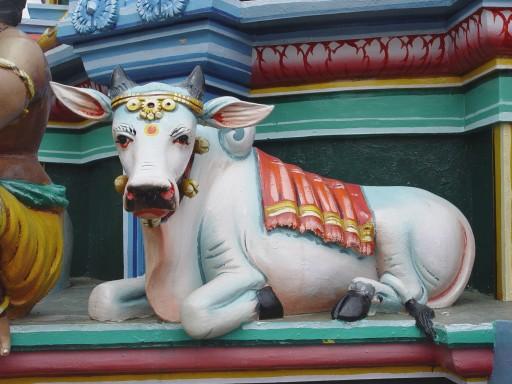
I really enjoyed Kipling’s argument criticizing Indian religion’s hypocritical love for animals. He points to Hindus “who would die sooner than eat flesh, but who would also rather die than touch or help a dying man of a low caste near his door.”[5] I wonder how someone can claim to be holy and righteous but shun creatures of his own race. Surely cruelty against humans is more pertinent than cruelty against animals. Some may argue differently, that the human is self-sufficient and an animal is not. But under the caste system, humans are not self-sufficient; they are restricted to the class into which they are born. This video provides an insight into the harsh treatment endured by these people. [6] In a sense, they become lower than animals in the minds of the upper classes. Kipling also points out the hypocrisy in the love and reverence for cows in the Hindu religion. These animals receive respect while others such as pigs are hated. A cow cannot stand as an example for animal rights when it is one of a few species that are well treated.

A sacred Hindu cow.[7]


[1] Course Packet, 991.

[2] CP, 994.

[3] CP 993.

[4] http://conservationfinance.files.wordpress.com/2006/10/church-attendance.jpg

[5] CP 995.

[6] http://youtube.com/results?search_query=hindu+caste&search_type=

[7] http://www.omkarananda-kamakshi.org/images/nandi%20at%20corners%201.jpg

Thursday, March 6, 2008

Kipling: An Equivocator?

Sophie Ryan

Professor Bump

Victorian Literature

6 March 2008

P2

Kipling: An Equivocator?

Much of what Rudyard Kipling wrote, and that for which he is most famous, documents or is inspired by his Indian experience. Kipling’s works reveal a great deal of love for India’s beauty and tranquility, as well as his inner love of its inhabitants. But, Kipling is also regarded by many as an ethno centrist promoter of England’s imperialist reign over India. He saw the English’s place as more of a care-taker position; the English represented guardians who brought the Indian people into civilization. Kipling’s stories are relatively free of English superiority airs of which Kipling is so often associated. However, some of his other works offer a more direct assertion of British imperial superiority. Kipling was a truly great writer, today his legacy is received with mixed emotions across the globe; he is labeled a creative genius on one spectrum and an authoritarian jingoist on the other. I believe him to be a product of his environment; he loved his Indian home while he also felt strong ties to his British heritage. As a result, he must filter his feelings through his social paradigm, resulting in many of his controversial or criticized works.

Kipling’s life began in India in 1865 when he was born to British, mildly affluent parents, who were Anglo-Indian. But at six years old he left India for England only to return eleven years later. As was the custom in ex-patriot families, the children were sent of to live with foster parents back in England. Kipling remained in the home for five years, which he horrifyingly details in Baa Baa, Black Sheep. He recalls his foster Mother, pseudo-named “Aunty Rosa,” declaring “That means two beatings. One at school and one here. That one will hurt most.”[1] [2] Simulation of child abuse at home Aunty Rosa’s punishment was given after three days of captivity in his bedroom. Kipling then finished his stay in Britain at a low-grade, inexpensive boarding school. There he experienced continued teasing and physical harassment. Keeping in mind Kipling’s childhood British memories it becomes hard to understand why this man so ferociously pronounced his British roots, often implying that the English experience surpassed that of its Indian counterpart. Especially interesting, is the fact that his stays in India were the most memorable and enjoyable times of his life. Seymour-Smith argues in his account of Kipling’s life that Kipling’s mistreatment by the English institution may have made him yearn for its acceptance which left him “no alternative but to adapt to these [British imperialistic] ways.”[3]

Again the irony in Kipling’s “assumption that Indians are generally inferior [to white Englishmen]”[4] becomes apparent upon reading his description of the return to India in his memoir. “After these [three or four days], my English years fell away, nor ever, I think, came back in full strength.”[5] This segway demonstrates Kipling’s love and appreciation for India and his deep personal connection for this country while also displaying his displaced attitude towards his heritage, or perhaps his confusion thereof. [6] Wood engraving of Bombay. He dubs Bombay the “queen of cities”[7] in the 19th C. Kipling’s young adult life developed in this country during his seven years as a journalist. He became intertwined with India’s culture and fell in love with her beautiful countryside. He documents his favorite country getaway Simla describing it as “pure joy – every golden hour was counted.”[8] His second Indian sojourn also marked the beginning of his fame as a writer. He published several short stories and upon his return to England, was already being applauded as a genius author.

These positive feelings and praise of India again become marred by his ethno centrist leanings. Just after exemplifying the jewels of India at Simla, he recounts his unfortunate trip back to town. His servant, whom he derogatorily refers to as a “coolie,”[9] becomes involved in a tiff with several other “coolies” and, to remedy the matter, Kipling “did not wish to be haled before any little Hill Rajah, knowing that the coolies would unitedly [sic] swear that I had directed the outrage.”[10] Additionally, some of Kipling’s most well-known poems appear haughtily imperialistic such as “Recessional” and “The White Man’s Burden.” The former acts as a prayer to God, asking him to never forget the sacrifices made by imperialists whose countries sacrificed so much to improve the lot of another. Many would argue, quite justly, that Britain did not seek to colonize India on moral grounds, but for profit. “The White Man’s Burden” carries this same theme of the sacrifice of colonization. This second poem does acknowledge the profit involved stating “to seek another’s profit, and work another’s gain.”[11] The poem continues on to underscore the sacrifices and accomplishments of the “white man colonizer” such as ending wars and fighting famines. This second poem is especially controversial because it directly and clearly defines the British imperial takeover as The White Man’s Burden, definitely hot-button words today. 12]Modern interpretation on Kipling’s “The White Man’s Burden” When interpreting Kipling’s take on India, it is important to remember his social environment and the standards of the time as well. Political correctness was inexistent, and many of his comments which may seem unsympathetic and appalling today, could have been commonly accepted in upper-class Anglo-Indian circles. Additionally, many of his popular tales such as The Jungle Books depict India as an exciting land where anything can happen. Mowgli, a lost boy, is compassionately taken in by a family of wolves. Perhaps this tale reveals Kipling’s inner, although ironic, appreciation for the Indian culture. The Disney remake may be a tad cheesy, but it directly expresses The Jungle Book’s thematic aim – to show India’s friendly, compassionate side. The following clip clearly demonstrates this sentiment. 13 A video revealing what friends are for in The Jungle Book movie

Kipling’s modern-day depiction is not as positive as the preceding movie may seem. He is often criticized as a Britain-obsessed jingoist. Public distaste towards his expansionist visions increased after World War Two, and in today’s world, where each word a person utters is scanned for political correctness, some of Kipling’s writings surely do not sit well with many people. The following clip clearly displays the negative attitudes associated with Kipling’s legacy and counter-reactions towards it. [14] A rapper performance This performance reveals exactly how many people feel about colonization: guilty. The rapper describes his heritage as a burden, rather than a privilege, as being white was in Kipling’s Africa. Society has shifted racial paradigms upside down since the Victorian Era. Now, minorities are encouraged to celebrate their diversity, and speak about their past burdens, such as slavery or oppression by a foreign power, such as the case of India. Kipling does the same thing in his poems; he celebrates his Anglo heritage and speaks about his own personal burden. Do not read me wrong, I am not defending his position, but simply trying to sympathize with is view point. This dramatic change in the social race perspective makes it extremely difficult for the modern reader to interpret writers such as Kipling because we cannot understand the cultural norms of his era.

Converse to modern reactions towards Kipling, he immediately became a well-known writer during his day. Many esteem that upon Lord Tennyson’s death, Kipling took his place in the public skyline of writers. He was awarded the Nobel Prize for literature in 1907, becoming the first Brit and youngest recipient of the award. Surely such an honor would not be bestowed upon an unworthy candidate. In India he is still extremely disliked although tides are changing. India’s first prime minister, Jawaharlal Nehru, remarked that Kim was his all-time favorite book and Kipling’s birth place was turned into a museum which hi-lights his works.

Kipling’s treatment of India and its inhabitants paint a conflicting story. The man does not consider India his home, or the origin of his heritage but still retains a love so deep for this country that it appears to trump the importance of England at times. He describes it magnificently in books yet often decries its inhabitants for their lack of civility which he believes England restores to this country of heathens. Are his criticisms of India and his praise of Britain’s imperialistic presence simply the ruminations of an ethno centrist? Or does he legitimately believe that the Indians benefit from British presence? These questions are difficult to answer and are still in open debate today. Seymour-Smith concisely addresses this dilemma saying “His belief that Indians were inferior was undermined by his belief that they were not, and his belief that they were not was undermined by his belief that they were.”[15] It appears to me that Kipling’s imperialistic mindset was simply a product of his generation, and that he truly sided with the Indian culture. He was born into an imperialistic society, yet he managed to shy away from complete rejection and degradation of India, which might have been easy considering his environment. Instead he created beautiful literature which underscored much of the positive that India had/has to offer. It also appears to me that he truly felt that his country’s involvement in colonization was a positive event. He fell in love with India and became a world-renowned writer by sharing his love for this country with the entire world.

Word Count

Count w/ quotes: 1, 544

Count w/o quotes: 1, 417

URL: http://sophievlit.blogspot.com/


[1] Rudyard Kipling, Something of Myself and other Autobiographical Stories (Cambridge: Cambridge University Press, 1990), 160.

[2] http://filmfanatic.org/reviews/wp-content/uploads/2006/11/ChildAbuse.JPG

[3] Martin Seymour-Smith, Rudyard Kipling (Great Britain: Queen Anne Press, 1989), 55.

[4] Seymour-Smith, 62.

[5] Kipling, 25.

[6] http://www.lib.lsu.edu/special/exhibits/india/px5d10.jpg

[7] Arley Munson, Kipling’s India (New York: Doubleday, Page and Co., 1915), 5.

[8] Kipling, 35.

[9] Kipling, 36.

[10] Kipling, 36.

[11] Jay Broadus Hubbell and John Owen Beaty, An Introduction to Poetry (New York: The Macmillan Company, 1922), 92.

[12] http://stephen.macek.faculty.noctrl.edu/images/UncleImperialist.jpg

[13] http://youtube.com/watch?v=dHenV6qzX_M

[14] http://youtube.com/watch?v=1QzoIPdM3Xc&feature=related

[15] Seymour-Smith, 63.

Monday, March 3, 2008

The Animal Estate

I found the RSPCA description interesting in that the society intended not only to promote the well-being of animals, but to also promote social improvement. “the connection between cruelty to animals and general resistance to social discipline could not have seemed clearer.”[1] Ritvo’s account paints the RSPCA as associating animal pain with ills of society –often a product of an “abuser [who] was a rough member of the urban proletariat.”[2] The organization was able to “redefine the social location of concern for animals”[3] in order to make its goals more easily attainable. “This genre of kindness to animals was a code for full and responsible acceptance of the obligations of society.” [4]It made defending animals fashionable and an obligation for anyone of good moral standing.
[5] RSPCA today, international influence.
Today, this the SPCA does not focus as much on human improvement (in some states they are allowed to enforce laws), but instead on providing resources for animals in need such as vaccines, rescue help after natural disasters and pet shelters. Now there is less social pressure on animal owners and “private citizens to implement the law”[6] to be considered an educated and socially acceptable member of society as Ritvo describes in the Victorian Era. The RSPCA’s Annual Report[7] described cases in which the society had found and prosecuted animal abuse in order that people would “perceive themselves as embattled participants in the struggle – even as potential victims – rather than just benevolent onlookers.”[8] The RSPCA hoped to “rouse the public conscience”[9] to persuade its readers to act against animal cruelty.
I believe that the social accountability the SPCA promoted in the Victorian Era should be used today to urge people to act against continued animal cruelty. Agreed, the Annual Report did appear somewhat propaganda-like with its dramatic tales of abuse towards “poor animals,”[10] but its means were effective in engaging people to act upon their new-found knowledge of cruelty towards animals. Today, when it comes to animals, people are more concerned with using their pets as accessories instead of worrying about where food and products such as mascara come from.[11]Animal Testing
I speak the truth, I am guilty myself. There are even “pet celebrity sites” such as lepaws.com, clearly depicting the relatively low sense of compassion for animals in our world today. The owner’s might enjoy the attention and money, but the animals surely do not enjoy practicing over and over again for scenes which are shot over and over again.[12] Celebrity Dog Photo

On a side note…
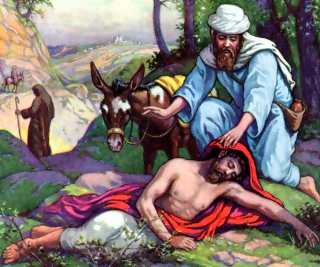
The SPCA’s purposes appeared to be founded on an almost religious theme as Ritvo states that the society promoted the “salvation of human souls” and “maintenance of social order”[13] and that people should “actively suppress vicious practices.”[14] It encouraged people to “take the road less traveled” and to “be a good Samaritan.” and help the lowly when no one else would. Any other thoughts??
(http://upload.wikimedia.org/wikipedia/commons/f/f6/Samaritan.jpg)Good Samaritan Photo
[1] Harriet Ritvo, The Animal Estate (Cambridge, MA: Harvard University Press, 1987), 153.
[2] Ritvo, 138.
[3] Ritvo, 129.
[4] Ritvo, 132.
[5] http://members.iinet.net.au/~asrspca/RSPCA_logo.gif
[6] Ritvo, 145.
[7] Ritvo, 136.
[8] Ritvo, 141.
[9] Ritvo, 161.
[10] Ritvo, 143.
[11] http://www.uncaged.co.uk/pgtests.htm
[12] http://www.lepawsagency.com/html/ourTalent.asp?size=small#
[13] Ritvo, 132.
[14] Ritvo, 144.

Wednesday, February 27, 2008

Black Beauty, part 2

The second part of Black Beauty appears to be a social commentary. Black Beauty changes hands many times and the reader is exposed to several different owners, learning more about the injustices not only towards horses, but towards people of the lower classes as well. The people in power are mainly depicted as unsympathetic and greedy who leave the poor to fend for themselves. Examples included in the book point out that because the lower classes, such as the non-independent cab drivers, often have no choice but to overwork the horses. This section also continues on with theme of comparison through the different master for which Black Beauty works.

Sewell subtly begins her social commentary through metaphor “Men will go fast, and if one can’t keep up to the other horses, it is nothing but whip, whip, whip, all the time.”[1] Black Beauty refers here to zealous drivers, but this reference also alludes to the pressures of society which apply to the Victorian Era as well as to today. Society pushes people continually in the ongoing rat race; we must continue to work, work, work. For many people working night and day on a meager salary is often not enough to feed a family. We see this situation illustrated several times in the later chapters of Black Beauty. Under Mr. Barry’s care Black Beauty suffered because her groomsman, Filcher, stole her corn to feed his family. He could not keep up with the physiological demands of his family, perhaps a product of low wages, and he in turn made the horse suffer. The cab horses reveal most intense example of the pressure to make money. Seedy Sam appears to be cruel to his horses, whipping and overworking them, pushing the animals towards their own death. However, in his view, he has no choice. Unlike Jerry, Sam does not own his own cab or horse and must make enough profit to “first pay the master, and then to provide their own living.”[2] [3]British currency He believed that caring for your horse’s well-being was a luxury and that “you must put your wife and children before the horse”[4] I believe this is where the reader begins to understand that man does impose tough standards and treatments upon animals, and that these men are often under tough standards and treatments as well, created by individuals of their own species who happen to have more power. The Governor, who originally criticized Sam, realizes this depressing fact sympathizing “It is hard times for both man and beast, and who’s to mend it I don’t know.” [5] The butcher’s son again emphasizes this same pressure to perform from those above us. He wears out his horse in an effort to deliver meats to demanding customers on time.[6] Time is money Today we pen up animals for slaughter because it is more cost and time effective just like the cab drivers’ treatment of the horses. It is my belief that this problem pervades all eras; man is apt to step on those below him to achieve personal gain.

Sewell also criticizes the extravagant and selfish lifestyles of the upper classes. Jerry, a hard-working, honest man is waits outside on New Year’s Eve and almost dies because of the carelessness of two drunk, aristocratic party-goers. Additionally, when Jerry tries to help a poor woman to a free cab ride, two zealous voters grab her cab, demanding a ride.

Black Beauty reveals itself as not only a novel promoting sympathy towards animals, but sympathy towards life in general “whether they be man or beasts”[7]. Every person has the obligation to treat all life forms with respect, including standing up for the oppressed. “If we see cruelty or wrong that we have the power to stop, and yet do nothing, we make ourselves sharers in the guilt.”[8] I believe that Jerry is the ultimate hero in the novel. He not only treats Black Beauty with respect and love, but he works to improve the lives of others as well, from a woman on the street to a horse in the carriage behind him.


[1] Anna Sewell, Black Beauty (Hertfordshire: Wordsworth Editions, 1993), 122.

[2] Black Beauty, 161.

[3] http://www.warwickshire.gov.uk/Web/graphics/graphics.nsf/graphics/Moneysurvey/$file/money.gif

[4] Black Beauty, 163.

[5] Black Beauty, 163-164.

[6] http://psdblog.worldbank.org/photos/uncategorized/2007/10/12/time_is_money_3.jpg

[7] Black Beauty, 59.

[8] Black Beauty, 161.